
A Summer on the Road: Grateful for the Opportunity to Train
As I look back over the past several weeks, one thing stands out more than anything else:I am grateful.
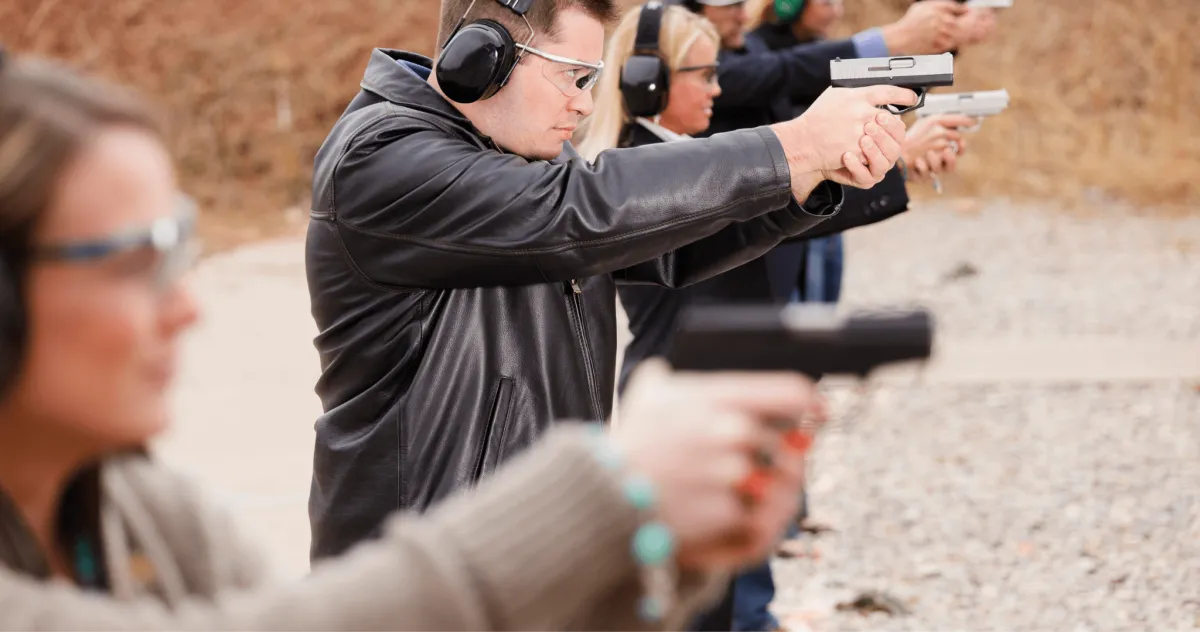
This summer has put a lot of miles on the vehicles, a lot of nights in hotels, and more than a few early mornings and late evenings on the road. Through A SAFE KNIGHT, INC., I have had the opportunity to travel to different parts of the country and spend time doing something I still genuinely enjoy—working with people who have taken on the responsibility of protecting others.
Some days that has meant standing on a range with law enforcement officers. Other days it has been working in a school, church, business, classroom, or training facility.
We have worked with law enforcement, firefighters, EMS personnel, school resource officers, educators, church security teams, community groups, and executive protection professionals.
Every group has been different, and every location has presented its own challenges.
And that is exactly why I continue to believe this work matters.
There Is Always Something to Learn
After more than three decades in law enforcement, military service, investigations, and years of teaching critical-incident response, it would be easy to assume that experience means having all the answers.
It doesn’t.
If anything, experience teaches you how much there still is to learn.
I have been fortunate throughout my career to work beside some exceptionally talented people. I’ve learned from fellow instructors, police officers, firefighters, medics, military personnel, and students who have brought their own experiences into our classes.
I still learn something almost every time I teach.
That’s important to me because A SAFE KNIGHT was never intended to be about standing in front of a room telling people how much we know.
It is about sharing what we’ve learned.
If something from my experience—or the experience of one of our instructors—can help another officer, teacher, firefighter, security team member, or citizen make a better decision during the worst few minutes of someone’s life, then the trip was worth making.
Training Has to Be Practical
One thing I have seen repeatedly throughout my career is that emergencies rarely look exactly like the training scenario.
They are messy.
Information is incomplete. People are scared. Communications don’t always work. Resources may not be where you expected them to be, and sometimes the person who has to make the first important decision is not a police officer or paramedic.
It may be a teacher.
A church volunteer.
An employee.
A parent.
Or simply the person who happens to be standing there when something goes wrong.
That is one reason we try to keep our training practical.
We want people to understand not only what to do, but also why they are doing it. If circumstances change—and they probably will—they need to be able to think, adapt, and make reasonable decisions.
Our Schools and Churches Deserve More Than a Checklist
I’ve spent a considerable amount of time working with schools, churches, and community organizations, and this summer has only strengthened my belief that preparedness cannot simply be another item checked off an annual requirement.
A plan sitting in a binder isn’t enough.
Neither is watching a video once a year.
People need an opportunity to ask questions, practice skills, identify problems, and talk honestly about what they would do if something happened in their building, with their people.
That doesn’t mean turning teachers into police officers or church volunteers into tactical teams.
It means giving good people practical knowledge and options.
Our School Crisis Response & Casualty Care (SCRCC)program is one example of that approach. We work with school personnel on realistic crisis response and casualty-care concepts that can help them during those critical minutes before additional help arrives.
The same philosophy applies to churches, businesses, community organizations, and security teams.
We meet people where they are and try to help them become better prepared for where they may someday have to be.
Sometimes the Most Important Question Is the Uncomfortable One
One of the questions I encourage organizations to ask is simple:
“If something happened here tomorrow, are we really prepared?”
Not what does the policy say?
Not when did we last complete the required training?
Not do we have an emergency plan?
Are the people who will actually be standing there prepared to use it?
There can be a big difference.
Finding a weakness in a plan or realizing that your people need additional training isn’t a failure. Finding it before an emergency gives you an opportunity to fix it.
That is what training, exercises, assessments, and honest conversations are supposed to accomplish.
Why We Keep Going
There have been moments this summer when I’ve been tired.
Another highway. Another hotel. Another early alarm. Unloading equipment again and preparing for another class.
Then the students arrive.
You start talking. Someone asks a good question. Another person shares an experience. You get onto the range or into a scenario, and you watch people become more confident in something they couldn’t do a few hours earlier.
That makes the miles worthwhile.
I don’t know whether someone we’ve trained this summer will ever need these skills.
I sincerely hope they don’t.
But if that day comes, I want them to have options.
I want them to remember something they practiced.
I want them to have confidence in their ability to make a decision.
Most importantly, I want them to go home afterward.
That’s why we continue doing this.
Maybe It’s Time to Have the Conversation
If you are responsible for a school, church, business, public-safety agency, security team, or community organization, I’m not going to tell you that A SAFE KNIGHT has every answer.
Nobody does.
What I can tell you is that we are willing to sit down with you, listen to your concerns, look at your environment, share what we’ve learned, and help determine where training or preparation could make a difference.
Sometimes that means a full training program.
Sometimes it means an assessment.
Sometimes it begins with nothing more than a conversation and a few questions.
If you haven’t reviewed your emergency plans recently, haven’t practiced them with your people, or simply aren’t sure whether your organization is as prepared as it should be,contact us.
Let’s talk about it.
We would much rather meet you today in a classroom, school, church, business, or on a training range than have you wish someday that you had made the call.
Thank you to every agency, organization, instructor, and student who has trusted us with a few hours or a few days of their time this summer.
We don’t take that trust lightly.
There are still plenty of miles ahead.
A SAFE KNIGHT, INC.
Bringing Order to Chaos.
If you haven’t trained it, you don’t own it.
